UFCW Local 1529
Standing strong for working families
Powering · Labor Education
Leader Spotlight · UAW International Representative
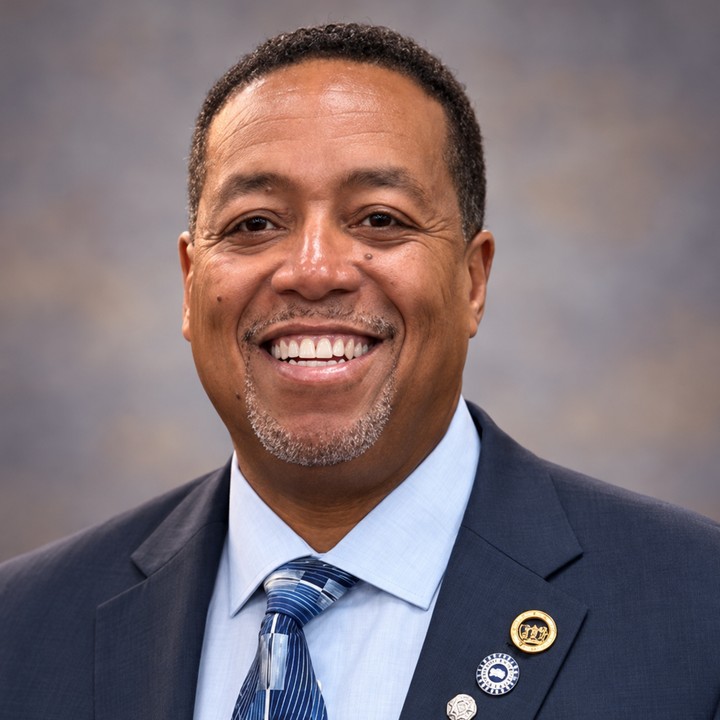
Adrian Millsap
From the floor of Ford's Chicago Assembly Plant to the UAW's Organizing Department in the South. Thirty-three years with the UAW, a career in Ford's PS&L division, two terms as chairman of Local 3036 in Memphis — and a seat at nearly every table in the Mid-South where labor and civil rights meet.
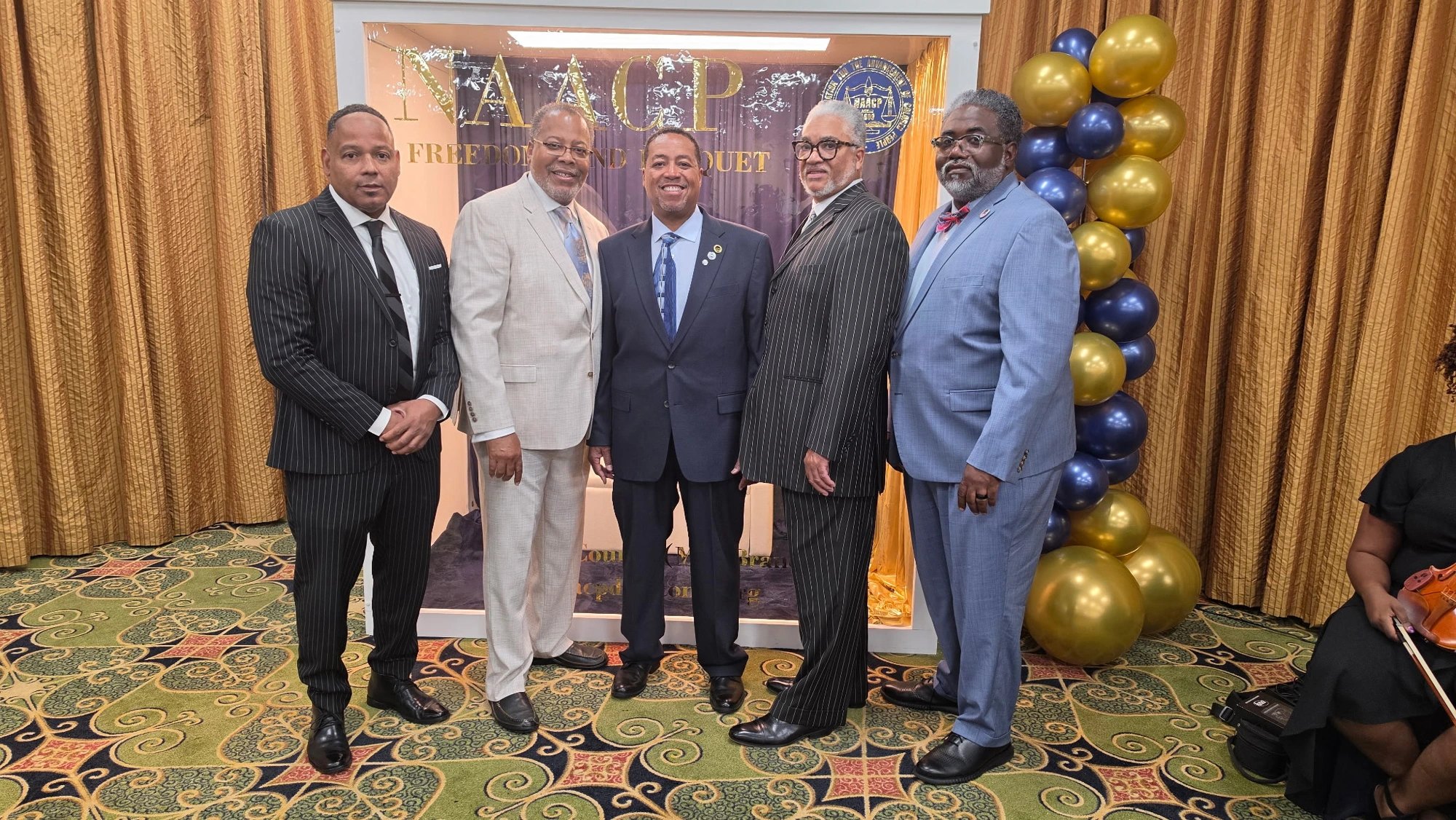
See UAW Region 8 in this app · 17 states, 63,000 membersAdrian sits on our Central Labor Council board, and he does it from the Mississippi side. That matters more than people realize. The state line runs through the middle of this metro, and plenty of folks use it as an excuse to stop caring about what happens on the other side. He never has. When the NAACP needs labor in the room, he's there. When labor needs the NAACP, he's there too. That's not two jobs to him. It's one.
— Kevin Bradshaw, President, Memphis & West Tennessee AFL-CIO Central Labor Council
Where he serves
Five chairs, one card
United Auto Workers
International Representative · Organizing Department
Thirty-three years with the UAW. He came up through Local 551 in Chicago — Ford's Chicago Assembly Plant on Torrence Avenue — and built his career in Parts, Supply and Logistics, the PS&L side of Ford that keeps every dealer and every repair shop in parts. He was elected chairman of Local 3036 in Memphis and served two terms. Today he carries a staff card for the International in the Organizing Department. An organizer working the South, out of a Southern city, is the whole ballgame right now.

DeSoto County NAACP
1st Vice President
Second in command of the DeSoto County Branch, carrying a union card into civil rights work on the Mississippi side of the state line — where right-to-work law makes both jobs harder.
The DeSoto County Branch
Coalition of Black Trade Unionists · Memphis
1st Vice President
CBTU was founded in 1972 by 23 Black labor leaders — among them Nelson Edwards of the UAW — to be the bridge between organized labor and the Black community. He holds the second chair of the Memphis chapter.
CBTU Memphis
Memphis & West Tennessee AFL-CIO Central Labor Council
Board member
He sits on the board of the Central Labor Council — the body where every union in the area meets to move as one. A Mississippi member on a Tennessee council, which is exactly how a metro labor movement is supposed to work.
What the Council does
Omega Psi Phi Fraternity, Inc.
Proud member
Friendship is essential to the soul. He wears the purple and gold, and brings that brotherhood into the same rooms where he does the labor and civil rights work.
Omega Psi PhiUAW Region 8
The region he organizes in
Region 8 is the UAW's Southern and Eastern region — 17 states plus D.C., 63,000 active members and 50,000 retirees, from Tennessee and Mississippi out to Texas and up to Maryland. Director Tim Smith. If you work in the South and you are organizing, this is your region. We keep a Region 8 hub right here in the app with the locals by state.
Region 8 hub in this app uawregion8.netOn the record
Speaking for the union, about the schools
In October 2023, nearly fifty DeSoto County residents filled the Career Technological Center West in Horn Lake to push the Raise Mississippi initiative — full funding for the state's public schools, nurses and librarians and counselors in the buildings, decent pay for the people who teach. Adrian spoke there for the United Auto Workers, standing with parents, a small-business owner and the Mississippi Association of Educators.
A UAW man at a school-funding meeting is not a detour. Ninety percent of Mississippi's children are in those public schools, and some of them are apprentices and members ten years from now.
DeSoto Times-Tribune coverageThe card he carries
Why that job mattered then, and still does
In the 1930s, holding a leadership role in an auto union was not a résumé line. It was a risk to your body. Companies kept private security forces, spies sat in the plants, and an organizer could be fired, blacklisted, beaten or killed for handing a man a piece of paper at the gate. There was no labor board worth much, no grievance procedure, no contract — the people who built those first locals had nothing to enforce their rights but each other.
And from the very beginning, the people doing that work understood something the history books keep separating into two chapters: civil rights and labor rights have always been the same fight. A contract that raises wages for everyone on the floor raises them for the Black worker who was told to be grateful for whatever he got. A union that wins seniority rights takes away a foreman's power to pick who eats. That is why the money, the buses, the sound systems and the bail came out of union treasuries.
- 1935Detroit
A charter nobody controlled yet
The UAW opened its first convention on August 26, 1935. The AFL handed down the charter and installed Francis Dillon as president over the delegates' objections — they wanted industrial unionism and a union they ran themselves.
- 1936South Bend
The union takes itself back
At the constitutional convention that April, the delegates elected Homer Martin — a former Baptist minister — as their first elected president and broke free of AFL control, casting their lot with the CIO.
- 1936–37Flint
Forty-four days on the floor
Workers sat down inside GM's plants on December 30 and did not leave until February 11, when General Motors recognized the UAW. Membership went from roughly 30,000 to 500,000 inside a year. Sitting still turned out to be the most powerful thing a worker could do.
- 1937The Overpass
Beaten for handing out paper
On May 26, Walter Reuther and other organizers were handing out leaflets at Ford's River Rouge plant when Ford's private security beat them bloody on the overpass. The photographs ran everywhere. Henry Ford won the fight and lost the country; Ford signed with the UAW in 1941.
- 1939–46Detroit
Holding it together
R.J. Thomas, a former Chrysler worker, took over a faction-torn union after Martin's ouster and steered it through the war. Reuther made his name with the “500 planes a day” plan — a blueprint for turning auto lines into aircraft plants.
- 1946–70The bargaining table
The middle class was bargained, not given
Reuther won the presidency in 1946 and built the UAW past 1.5 million members. Multi-year contracts. Raises tied to the cost of living. Employer-paid health insurance. Pensions. Paid vacation. Things Americans now call normal were once things a union had to go and take.
- 1963Birmingham
Bail money, wired same day
After the mass arrests that May, Reuther moved $160,000 in bail to free the jailed demonstrators — the AFL-CIO, the Industrial Union Department, the UAW and the Steelworkers putting in $40,000 apiece. Union dues opened those cell doors.
- 1963Washington
The word “Jobs” in the title
It is the March on Washington for Jobs and Freedom because labor insisted the jobs stay in it. The UAW paid a third of the sound system at the Lincoln Memorial, bused in about 5,000 members, printed thousands of the placards, and Reuther spoke from those steps — one of the few white speakers that day.
- 1962 & 1972Detroit
Nelson “Jack” Edwards
Appointed an International Representative in 1947 — the same title Adrian carries today — Edwards spent fifteen years in that job before becoming, in May 1962, the first Black person elected to the UAW's International Executive Board. He was elected an international vice president in 1970, and in September 1972 he helped found the Coalition of Black Trade Unionists and served as its first national treasurer. CBTU still gives an award in his name.
- 1968Memphis
A check at a funeral march
Four days after Dr. King was killed here, Reuther walked in the silent memorial march with Coretta Scott King among 42,000 people — and wrote the striking sanitation workers a check for $50,000, the largest outside contribution the strike received. On April 16, AFSCME Local 1733 won recognition.
Motor City
Detroit was the proving ground for both
The Great Migration carried Black families out of the South and into those plants, and Henry Ford hired them by the thousands — mostly into the foundry, the hottest and hardest work in the complex. He expected loyalty for it, and he used it: when the union came, the company counted on Black workers to break the strike.
April 1941 at the River Rouge is where that calculation broke. Horace Sheffield, a foundry worker himself, got hold of a sound truck and called to the men still inside. The UAW worked the outside with Walter White of the NAACP, the National Negro Congress, Rev. Charles Hill, Rev. Horace White and the NAACP Youth Council. On April 4, more than a thousand Black workers walked out of that plant. Shelton Tappes got an anti-discrimination clause negotiated into the agreement. On April 11, Henry Ford signed his first contract with the UAW. That is the week the NAACP and the UAW stopped being two separate projects.
It did not make the union clean. Black members still got the worst jobs and were kept off the executive board, so in 1957 nineteen of them — Sheffield and Robert “Buddy” Battle III among them — founded the Trade Union Leadership Council and spent years forcing their own union to live up to itself. They pressed the issue on the convention floor in Atlanta in 1959, and in 1962 Nelson Jack Edwards finally took a seat on that board. Black workers had to organize inside the house they helped build. Both things are true, and the honest version keeps them both.
June 23, 1963 · Woodward Avenue
He gave the dream in Detroit first
Between 125,000 and 200,000 people walked down Woodward that day in the Walk to Freedom — the largest civil rights demonstration this country had ever seen to that point. The date was chosen deliberately: twenty years to the week after the 1943 Detroit race riot. Rev. C.L. Franklin and Rev. Albert Cleage organized it through the Detroit Council for Human Rights, and Dr. King walked the front line arm in arm with UAW President Walter Reuther and Mayor Jerome Cavanagh.
At Cobo Hall, 25,000 packed the arena and thousands more stood outside listening on loudspeakers while Dr. King preached an early, fuller version of “I Have a Dream” — two months before he stood at the Lincoln Memorial and said it to the nation.
Berry Gordy was in that crowd, and he was moved enough to put it on record. The Great March to Freedom: Reverend Martin Luther King Speaks became the first spoken-word album Motown ever released, and Dr. King directed every dollar of the royalties to the SCLC. So the Motor City carried that speech twice — once in a hall full of autoworkers, and once on a Detroit record label.
It was never two movements
Dr. King did not come to Memphis for a speech. He came for a strike. Thirteen hundred sanitation workers walked off after Echol Cole and Robert Walker were crushed to death in the back of a truck, and what they were demanding was union recognition. The placards read I AM A MAN, and the thing that would prove it was a contract. He was killed in this city standing with workers who wanted a union.
So when a man carries a UAW staff card into an NAACP vice presidency, sits in CBTU, and takes a seat on a Central Labor Council board, he is not wearing four different hats. He is standing exactly where this movement has always stood — and in Memphis, of all places, that is not symbolism. It is the local history.
In the room
 Translate